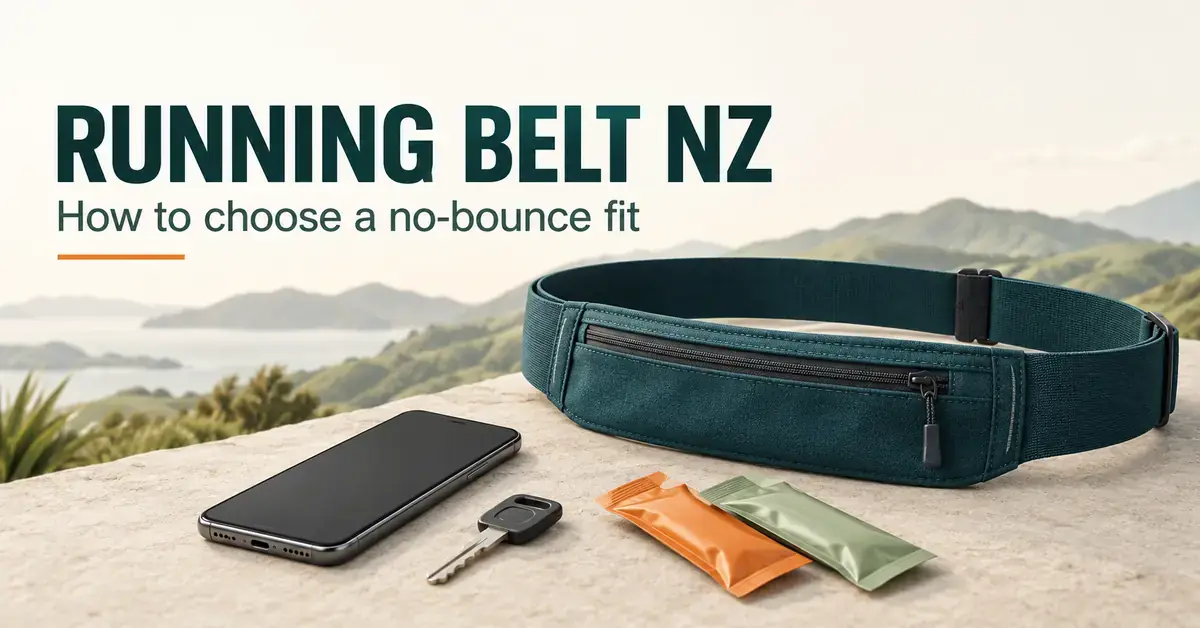
A running belt is a lightweight band worn around the hips to carry a phone, keys, cards, gels and sometimes water, so your hands stay free and nothing swings around as you run. For most Kiwi runners it is the simplest way to carry the essentials on an urban loop through the Auckland Domain, a long Sunday effort in the Port Hills, or a hilly Dunedin route without resorting to armbands or stuffed shorts pockets.
This guide explains the main types of running belt sold in New Zealand, how to size and fit one so it does not bounce, what storage and weather features actually matter, and roughly what you will pay in NZD. It also covers the mistakes that make a belt ride up or chafe, and how to keep one lasting through years of sweaty training. Every price and specification below was checked against the manufacturer or a New Zealand retailer at the time of writing; always confirm the current figure before you buy.
Key Points
- Fit beats features. A belt worn low on the hip bones, sized to your hip measurement, is what stops the bounce — not the price tag.
- Pick the type first. Tubular band for minimalist road carrying, zip pouch for the basics, hydration belt for self-supported runs, trail belt for poles and a jacket.
- Soft flask vs hard bottle: soft flasks ride flat and stay quiet as they empty; hard bottles refill faster and reseat one-handed.
- Water-resistant, not waterproof: bag your phone in heavy rain.
- Budget from about NZ for a quality belt; imported and multi-flask models cost more.
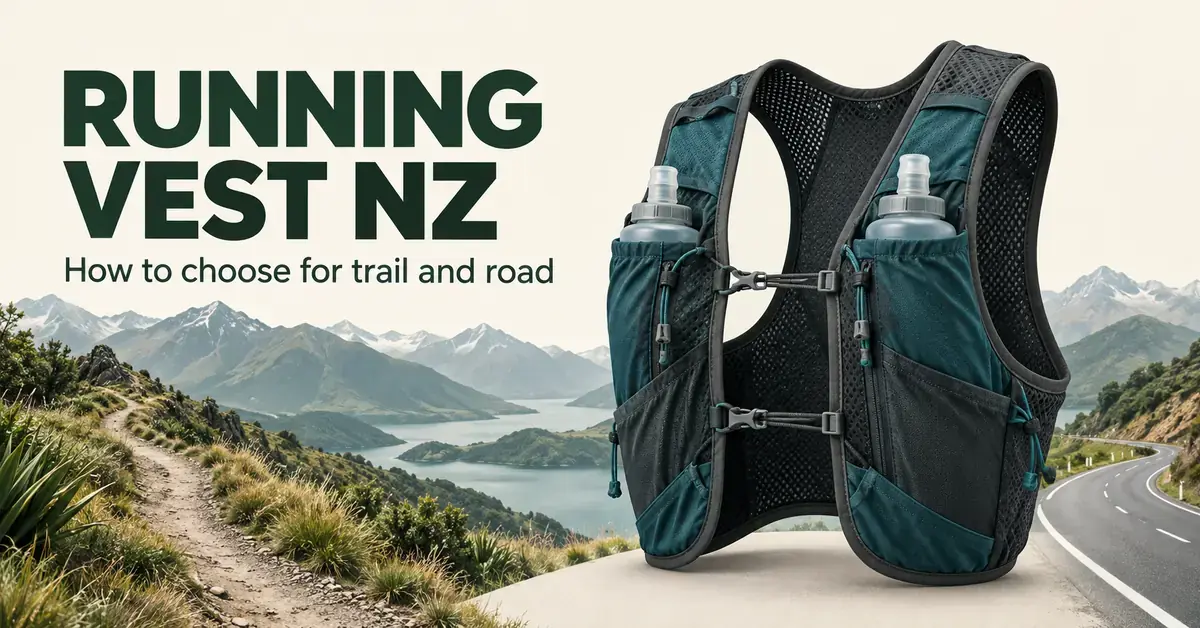
- Outgrown a belt? Once you carry a jacket, food and 1L-plus of water, switch to a hydration vest.
What is a running belt, and how does it stay put?
A running belt keeps a small load pinned to your centre of gravity so it moves with you rather than against you. The reason a good belt does not bounce is placement and tension: worn low and snug around the top of the hip bones (the iliac crest), the load sits on bone rather than soft belly tissue, and there is little vertical movement to amplify with each stride. A loose bum bag worn high on the waist swings like a pendulum; a compression belt worn low does not.
Weight distribution matters just as much. A phone at the front balanced by keys or a flask at the back keeps the belt level and stops it rotating. Overloading one side, or cramming a rigid pack far beyond its intended volume, is what turns a comfortable belt into an annoyance. Getting this right is the same balance principle that makes a well-fitted running hydration pack sit still on longer efforts.
Tubular bands vs zip pouches vs buckled belts
Three broad designs dominate the New Zealand market, and the differences are practical rather than cosmetic:
- Tubular pull-on bands (such as the FlipBelt) are a continuous elasticated tube with slot openings around the whole circumference. There is no buckle to dig in, storage is spread evenly, and they sit very flat — the trade-off is that you pull them on over the hips and cannot adjust the fit on the run.
- Expandable zip pouches (such as the SPIbelt) use one stretchy zipped pocket on a thin adjustable elastic strap. They are minimalist, secure and cheap, but carry less and concentrate the load in one spot.
- Buckled webbing belts use a clip and adjustable strap, often with several pockets and bottle holsters. They are the most versatile and easiest to size, but the clip and straps add bulk and a potential rub point.
What types of running belt can you buy in NZ?
Choosing a category comes before choosing a brand, because the right style depends on how far you run, how hot it is, and whether you need to carry water. The main options are:
- Minimalist tubular bands: the default for road runners and commuters who carry a phone, keys, cards and a couple of gels and want the flattest possible profile.
- Hydration belts: a belt with one or two bottle holsters for self-supported runs where taps are scarce. These split into soft-flask and hard-bottle designs (covered below).
- Multi-pocket zip belts: segmented pouches that separate keys from a phone screen, often with a water-resistant lining — useful in changeable New Zealand weather.
- Trail belts: wider bands with expandable rear storage for a light jacket and elastic loops for folding poles, aimed at longer backcountry and ultramarathon outings.
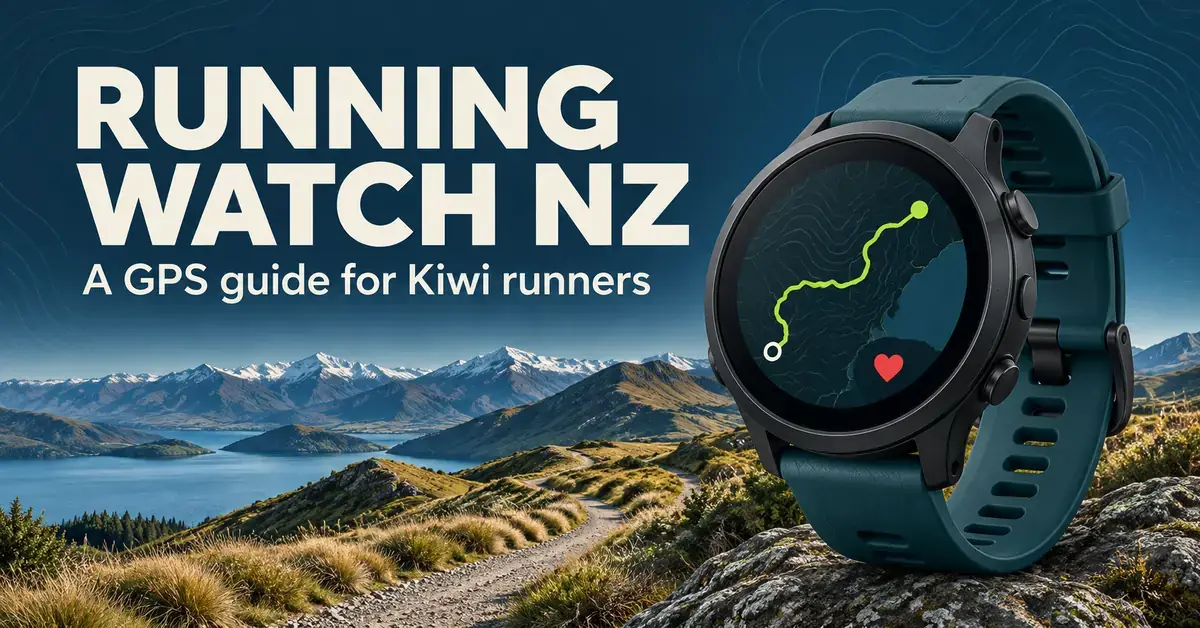
If you already own a GPS watch and good socks, a belt is usually the last small piece of the everyday running kit; it pairs naturally with a GPS running watch and a decent pair of running socks for a complete no-fuss setup.
Running belt with a water bottle: soft flask or hard bottle?
A hydration belt is worth it once your runs regularly pass roughly 60–90 minutes or the weather turns hot, and the choice between a soft flask and a hard bottle changes how the belt behaves. Soft collapsible flasks shrink as you drink, which stops water sloshing and lets the belt ride flat when empty; the downside is they are slower to refill and fiddlier to reseat. Rigid bottles hold their shape, drop back into an angled holster one-handed at speed, and refill quickly under a tap, but they stay bulky even when empty and can slosh when half full.
Common capacities range from a single 500 ml flask to twin 250–300 ml bottles balanced on each hip. A belt is a lighter, cooler alternative to a full vest for many runners, but for anything beyond about two hours in the heat most people move to a vest — compare the two in the hydration pack guide before deciding.
How do you size and fit a running belt so it does not bounce?
Fit is the single biggest reason a belt succeeds or fails, and it comes down to measuring the right part of your body. Measure around the top of your hips and pelvic bone — not your natural waistline — with a soft tape while wearing your usual running shorts, then match that number to the maker’s size chart rather than your trouser size.
Fixed-size tubular bands are unforgiving here: the Naked Running Band, for example, comes in around a dozen non-adjustable sizes for waists of roughly 28–39 inches, so ordering the wrong one means an exchange. Buckled belts are more forgiving because you cinch the strap to fit. Whatever the style, follow these checks:
- Sit it low. Anchor the weight over the hip bones, not the soft midsection, for a firmer, lower-movement base.
- Balance the load. Put the phone at the front and keys or a flask at the back so the belt stays level.
- Cinch on an empty breath. With adjustable belts, tighten while your lungs are empty so the elastic still flexes as you breathe.
- Test loaded, at home. Load it with your real gear and do a minute of high knees; if it creeps upward it is too loose or too lightly filled.
What features actually matter: storage, weather and visibility
Beyond fit, a handful of features separate a belt that earns its place from one that annoys you. Prioritise these over marketing language:
- Phone-sized main pocket: a high-stretch panel that holds a large modern phone flat against the body rather than proud of the belt.
- A key clip and separate compartments: a fixed loop or divided pocket keeps sharp keys away from your phone screen and stops small items falling out.
- Water resistance, not waterproofing: most belts, including the SPIbelt, are water-resistant against sweat and light rain but are not submersible. In a genuine downpour, seal electronics in a small zip-lock bag first.
- Reflectivity: reflective trim on the front and back matters for dark winter loops and rural roads, where a belt sits at a height drivers’ headlights catch.
- Race-bib toggles: some belts include cord locks that hold a race number without pinning holes in your top — handy if you enter events such as the Auckland Marathon.
Carrying trail poles and a jacket
For steep terrain, some belts add rear silicone-gripped elastic loops that hold folding poles horizontally across the lower back, keeping your hands free on technical descents and long climbs like those Dunedin runners meet on notoriously steep streets in suburbs such as City Rise (Wikipedia). Wider trail belts, such as the Salomon Pulse, add diagonal grip straps that double as pole or jacket carriers — useful stowage for events like the Taupō Ultramarathon where conditions change fast.
Which running belts are popular in New Zealand, and what do they cost?
The table below compares widely available models with their key specs and indicative NZD prices from official brand stores and New Zealand retailers. Prices move often and imported models cost more once shipping and exchange rates are added, so treat these as a guide and confirm at the checkout.
Comparison
| Belt | Type | Hydration / capacity | Indicative NZD price | Best for |
|---|---|---|---|---|
| FlipBelt Classic | Tubular pull-on band | None (add bottle); holds phone, keys, cards, gels | NZ.90 | Everyday road running and commuting |
| FlipBelt Zipper | Tubular band with zip pocket | None; secure zipped storage | NZ.90 | Runners who want a lockable pocket |
| Salomon Pulse Belt | Stretch hydration belt (62 g) | Two 500 ml soft-flask pockets + pole/jacket straps | NZ.99 | Trail and long road runs |
| SPIbelt Original | Expandable zip pouch | None (optional clip-on bottle); one expanding pocket | Imported, price varies | Minimalist essentials |
| Naked Running Band | Fixed-size stretch band (~57 g) | Optional flasks; three deep pockets, 12 set sizes | Imported, price varies | High-capacity no-bounce carrying |
| Fitletic Fully Loaded | Buckled hydration belt | Twin bottles + zip pockets | At Rebel Sport (check current) | Structured multi-pocket carrying |
| Ronhill 360 Waistband | Elastic waistband | None; continuous slot pocket | Imported, price varies | Ultra-light phone-and-keys carry |
Where to buy a running belt in NZ
FlipBelt and its water bottle are stocked locally by specialist endurance retailer Fuelld, which lists the Classic at NZ$74.90 and the Zipper at NZ$79.90. Salomon sells the Pulse Belt directly through its New Zealand site for NZ$69.99. Rebel Sport carries mainstream waist packs including Nike and Fitletic in stores nationwide, Further Faster stocks a running-belt range aimed at trail and road runners, and NineFit and Fishpond import a wider selection. Buying from a New Zealand seller usually means faster delivery, local returns and GST already included — worth weighing against the sometimes lower sticker price of an overseas listing.
What are the most common running belt mistakes?
Most complaints about running belts trace back to a few avoidable errors rather than the gear itself:
- Buying on price alone. A cheap belt with a flimsy zip or thin elastic stretches out within a season; a slightly dearer belt with quality elastic outlasts several of them.
- Guessing the size. Ordering a fixed-size band off your trouser size is the number-one cause of a bouncing or pinching belt. Measure your hips and use the chart.
- Wearing it too high. On the natural waist a belt rides up and chafes; drop it onto the hip bones.
- Overloading it. Cramming a belt past its intended volume strains the zip, unbalances the load and pulls it out of place. If you routinely carry a jacket, spare layers and 1.5 litres of water, you have outgrown a belt and want a vest.
- Machine-washing with softener. Hot cycles and fabric softener wreck the elastic and the wicking finish (see care below).
- Ignoring the empty bounce. A hard bottle sloshes most when half full; a soft flask solves this, so match the hydration style to how you actually drink.
How do you care for a running belt?
Sweat is corrosive: concentrated salt stiffens synthetic fibres and degrades zips over time, so a simple routine keeps a belt supple for years. Never machine-wash on a hot cycle, and never use fabric softener — it leaves a residue that destroys the fabric’s ability to wick and breathe.
- Rinse after sweaty runs. A quick soak in cool fresh water dissolves salt before it sets.
- Hand-wash with mild soap. Gently work a technical-wash or fragrance-free soap through the high-friction hip zones every week or two.
- Flush the zips. Run water through zip tracks to clear grit and dried electrolyte powder.
- Air-dry out of the sun. Hang to dry away from direct sun and heaters; never tumble-dry, which cooks the elastic.
Who should choose which belt?
Match the belt to your typical run. A minimalist tubular band or zip pouch suits road runners, commuters and parkrunners who carry only a phone, keys and a gel or two. A hydration belt suits runners doing self-supported efforts of an hour or more where taps are unreliable, and anyone who dislikes the coverage of a vest. A wider trail belt with pole loops suits runners on hilly or backcountry routes who want to offload their hands on climbs. If you find yourself carrying a jacket, food and more than about half a litre of water, step up to a vest instead.
Sources
- FlipBelt — official range and specifications
- Fuelld (NZ) — FlipBelt Classic, Zipper and water bottle pricing
- Salomon New Zealand — Pulse Belt price and specs
- SPIbelt — expandable pocket and water-resistance details
- Naked Sports Innovations — Naked Running Band sizing and pockets
- Further Faster (NZ) — running belt range
- Rebel Sport (NZ) — Fitletic Fully Loaded Waist Pack
- Ronhill — 360 Running Waistband
- Tom’s Guide — best running belts overview
Frequently Asked Questions (FAQ)
How do I stop my running belt riding up?
Wear it low around the top of your hip bones rather than on your soft waistline, and buy the size that matches your hip measurement rather than your trouser size. Balance the load front-to-back — phone at the front, keys or a flask at the back — so the belt stays level and does not creep upward as you run.
Can a large phone fit in a running belt?
Yes. Most tubular bands and expandable zip belts use high-stretch fabric that holds a large modern smartphone flat against your body. For the steadiest ride, slide the phone into the widest panel so it lies parallel to your hip line rather than sitting proud of the belt.
Is a running belt or a hydration vest better for long runs?
A belt is lighter, cooler and less restrictive and works well up to roughly two hours or one to two bottles of water. Beyond that, or when you need to carry a jacket, food and more fluid, a hydration vest carries the load more comfortably across the shoulders. Many runners own both and pick by distance and weather.
Are running belts waterproof in NZ rain?
Most are water-resistant, not waterproof: their fabrics and coated zips shrug off sweat and light showers but are not submersible. In heavy rain, seal your phone in a small zip-lock bag inside the belt to be safe.
How much does a good running belt cost in New Zealand?
Simple, reliable belts start around NZ$70 — the FlipBelt Classic is NZ$74.90 and the Salomon Pulse Belt NZ$69.99 from New Zealand sellers, with a FlipBelt water bottle adding roughly NZ$25. Imported specialist bands and multi-flask hydration belts run higher once shipping is added, while basic supermarket-style waist packs cost less but wear out faster.