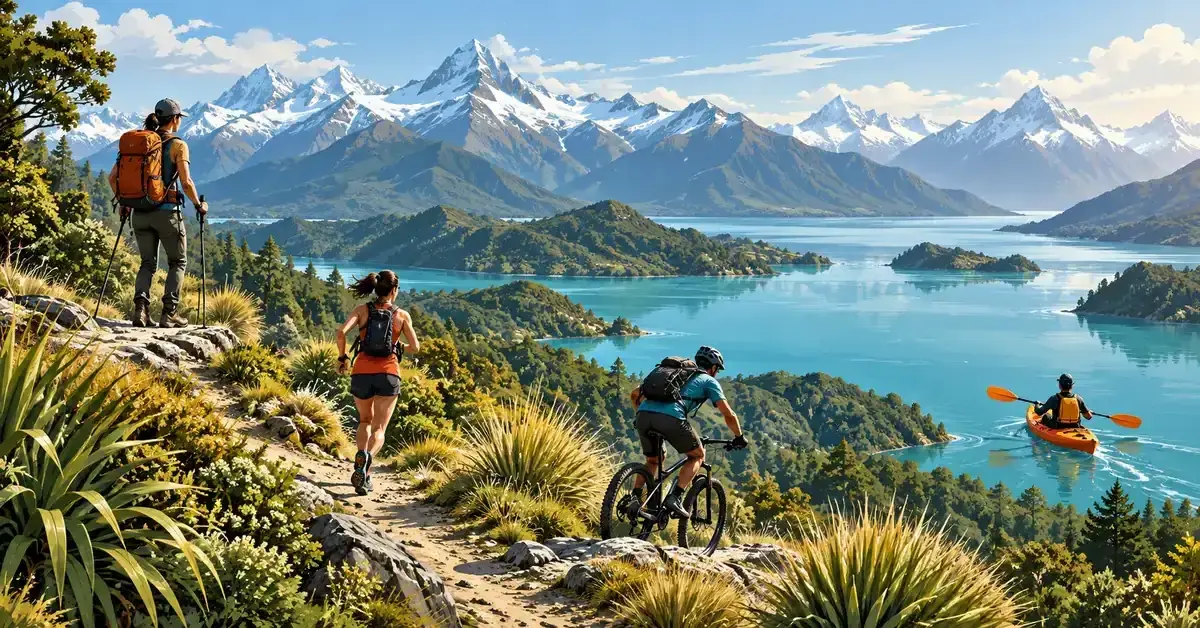
Outdoor sports are physical activities played in natural or open-air settings — from hiking, trail running and mountain biking to kayaking, surfing, climbing and skiing. They build fitness and mental resilience, deepen a sense of connection with the landscape, and welcome almost every ability level. This guide explains the main types of outdoor sports, the health benefits backed by research, the gear and planning you need, and how to start safely, with a particular eye on New Zealand’s world-class outdoors.
Key Points
- Definition: physical activities played outdoors, grouped into land-based, water, air and winter sports.
- Top NZ activity: walking — close to 6 in 10 adults walk for recreation weekly; cycling, running, tramping and kayaking are all growing.
- Proven benefit: 20–30 minutes in nature measurably lowers cortisol and blood pressure, and green exercise improves mood versus indoor training.
- Safety framework: New Zealand’s five-step Land Safety Code — choose the right trip, understand the weather, pack warm clothes and extra food, share your plans, and take care of each other.
- Essentials: layered weatherproof clothing, terrain-appropriate footwear, first-aid and activity-specific safety gear, plus map, compass and a planning app.
What are outdoor sports?
Outdoor sports are recreational or competitive physical activities carried out outside, usually in natural environments such as forests, mountains, rivers, coastlines or parks. They overlap with the broader idea of outdoor recreation, but the emphasis in sport is on movement, skill and physical challenge rather than passive enjoyment of nature.
The category is deliberately broad. It stretches from low-intensity, highly accessible pursuits like walking and social cycling to high-risk disciplines such as whitewater kayaking or alpine climbing. What they share is a setting that is variable and only partly controllable — terrain, weather and daylight all shape the experience, which is exactly why preparation matters more than it does for most indoor sport.
The main types of outdoor sports
Outdoor sports are commonly grouped by the environment in which they take place. Each group demands different skills, equipment and safety knowledge.
Land-based sports
Land-based sports are the largest and most accessible group. They include hiking (called tramping in New Zealand), trail running, mountain biking, gravel cycling, rock climbing, orienteering and field-based team sports such as football, rugby and cricket. Many need little more than shoes and a safe route to begin.
Water sports
Water sports take place on or in lakes, rivers, harbours and the ocean. Common examples are kayaking, canoeing, stand-up paddleboarding, surfing, rowing, swimming, snorkelling and scuba diving. They carry drowning and cold-water risk, so flotation devices, an understanding of conditions and, for diving, formal certification are essential.
Air sports
Air sports involve leaving the ground — skydiving, paragliding, hang gliding, bungy jumping and hot-air ballooning. Because the consequences of error are severe, these are almost always done through licensed operators with certified equipment and instruction rather than independently.
Winter sports
Winter sports are played on snow or ice: alpine and cross-country skiing, snowboarding, ice skating, sledding and ski touring. In New Zealand the season runs roughly June to October at fields such as those around Ruapehu, Queenstown and Wanaka.
Outdoor Sports by Category
| Category | Example sports | Typical setting | Key safety focus |
|---|---|---|---|
| Land-based | Hiking, trail running, mountain biking, climbing, gravel cycling | Trails, forests, mountains, parks | Navigation, footwear, weather |
| Water | Kayaking, surfing, paddleboarding, swimming, scuba diving | Rivers, lakes, harbours, ocean | Flotation, cold water, conditions |
| Air | Skydiving, paragliding, hang gliding, bungy jumping | Above ground, launch sites | Licensed operators, certified gear |
| Winter | Skiing, snowboarding, ice skating, ski touring | Snow and ice fields (NZ: Jun–Oct) | Avalanche awareness, cold, terrain |
Outdoor sports in New Zealand
New Zealand is one of the most outdoor-oriented countries in the world, and walking is the single most popular activity: national surveys have found close to 6 in 10 adults walked for recreation in the previous week. Cycling, jogging and running, fishing, tramping and kayaking have all shown rising participation, and non-organised activity like running and swimming has grown faster than traditional organised sport.
The country’s compact geography puts alpine passes, native forest, braided rivers and surf beaches within a short drive of most cities, which is why events on this site — from the New Zealand trail running calendar to multisport races — lean so heavily on the landscape. If you are moving from road to trail, the wider New Zealand running scene is a natural bridge into off-road outdoor sport.
Health and wellbeing benefits of outdoor sports
Outdoor sports deliver the physical benefits of any regular exercise — stronger cardiovascular fitness, improved muscular endurance, better weight management and healthier blood pressure — alongside a set of effects specific to being outside.
- Measured stress reduction. Peer-reviewed studies show that 20–30 minutes spent in a green, natural setting lowers salivary cortisol (a stress hormone) and blood pressure, and that exercising in nature produces lower cortisol than the same workout indoors.
- Better mood and mental health. Systematic reviews of “green exercise” find greater improvements in mood and reduced anxiety and depressive symptoms compared with exercising in built-up environments.
- Vitamin D and daylight. Time outdoors supports vitamin D production and healthy circadian rhythms, though sun protection is still important during New Zealand’s high-UV months.
- Social connection. Clubs, group rides and events turn training into community, which is one of the strongest predictors of sticking with an activity.
These benefits scale with consistency rather than intensity, so a regular gentle habit — a weekly tramp, a club run or a paddle — often does more good over a year than occasional extreme efforts.
How to prepare: New Zealand’s Land Safety Code
Preparation is what separates a good day outdoors from a rescue. For land-based activities, New Zealand’s official framework is the Land Safety Code, developed by the Department of Conservation (DOC), the NZ Mountain Safety Council, Land Search and Rescue, NZ Police and MetService. It sets out five steps:
- Choose the right trip for you — match the route to the fitness, skills and experience of everyone in the group.
- Understand the weather — check the forecast, expect it to change quickly, and be willing to turn back.
- Pack warm clothes and extra food — prepare for worse conditions and a possible unplanned night out.
- Share your plans and take ways to get help — tell a trusted person your route and return time, and carry a distress beacon or reliable communication for remote areas.
- Take care of yourself and each other — keep eating, drinking and resting, and stay together as a group.
For specific parks, always check DOC track alerts and closures before you go — for example on the Tongariro Alpine Crossing, where volcanic and alpine conditions can make a well-known walk dangerous. Similar planning principles apply to endurance events; guides such as choosing a hydration pack cover the fuelling and water side in detail.
Essential gear and navigation tools
Gear depends on the activity, but a few essentials apply across most outdoor sports.
- Clothing: dress in layers — a moisture-wicking base, an insulating mid-layer and a waterproof, windproof shell — plus a warm hat and, in New Zealand, sun protection.
- Footwear: supportive, grippy shoes or boots suited to the terrain; for off-road running, trail-specific shoes.
- Safety kit: a first-aid kit, and activity-specific protection such as helmets for cycling and climbing or flotation devices for water sports.
- Navigation: a topographic map and compass remain the reliable fallback because they do not run out of battery. Digital tools complement them — the NZ Mountain Safety Council’s free Plan My Walk app lists over 3,000 tracks, huts and campsites with weather and alerts, while Outdooractive is a widely used mapping app (it absorbed the older ViewRanger app, which was shut down in early 2022).
- Water and food: carry enough for the day plus a margin, and know how to treat water — a UV purifier or a hollow-fibre filter both work for backcountry sources.
Extreme and adventure sports for thrill-seekers
Extreme sports push participants toward higher risk and intensity in exchange for adrenaline and technical challenge. Among air sports, skydiving — freefalling from an aircraft before deploying a parachute — is the most widely practised. On land, downhill mountain biking and rock climbing test nerve and skill on steep terrain, while on water, whitewater kayaking and rafting navigate fast, technical rivers.
New Zealand is a global hub for several of these: it is the birthplace of commercial bungy jumping and a major destination for skydiving, jet boating and canyoning. The consistent rule is that risk is managed, not ignored — through training, appropriate equipment, licensed operators and honest assessment of your own ability. Endurance sport has its own extreme end too, from the country’s toughest ultramarathons to the swim-bike-run demands of triathlon.
Common mistakes to avoid
Most outdoor mishaps come from a handful of avoidable errors rather than freak events.
- Underestimating the weather. Conditions in the mountains and on the coast change fast; a fine morning is not a guarantee.
- Overestimating fitness or skill. Choosing a trip beyond the group’s experience is the single most common cause of trouble.
- Not telling anyone your plans. Without a shared route and return time, help cannot start quickly if you are overdue.
- Relying only on a phone. Batteries die and coverage disappears; carry a map, compass and, in remote terrain, a beacon.
- Skimping on food, water and layers. Cold, dehydration and low energy compound quickly and impair judgement.
- Ignoring local rules. Fire bans, protected areas and permit requirements exist for good reasons — check with DOC or the local authority. You can read more about the country’s outdoor culture via The New Zealand outdoors.
Who outdoor sports suit
Outdoor sports suit almost everyone, because the category spans such a wide range of intensity. Beginners and families are well served by walking, easy cycling and short coastal paddles. People seeking fitness gains gravitate to trail running, road and gravel cycling and open-water swimming. Thrill-seekers find their level in climbing, mountain biking and air sports. Older adults and those returning from injury can start with low-impact options like walking and flat-water kayaking and build from there. The best outdoor sport is simply the one you will do regularly, matched honestly to your current ability and the environment around you.
Sources
- Department of Conservation — Land Safety Code
- NZ Mountain Safety Council — Plan My Walk and outdoor safety
- Sport NZ — participation in sport and active recreation
- Levels of Nature and Stress Response (peer-reviewed study on nature and cortisol)
- Topend Sports — most popular sports in the world by fans
- Outdooractive — mapping and route-planning app (formerly ViewRanger)
Frequently asked questions (FAQ)
What are considered outdoor sports?
Outdoor sports are physical activities performed outside, usually in natural settings. They include hiking, trail running, mountain biking, rock climbing, kayaking, surfing, cycling, skiing and outdoor team sports such as football and rugby. They are grouped by environment into land-based, water, air and winter sports.
What are the benefits of outdoor sports?
Outdoor sports improve cardiovascular fitness, muscular endurance and weight management like any exercise, and add benefits specific to being outside. Research shows 20 to 30 minutes in a natural setting lowers the stress hormone cortisol and blood pressure, and reviews of “green exercise” find better mood and reduced anxiety compared with indoor workouts.
What is the most popular outdoor sport?
Globally, football (soccer) is the most popular outdoor sport, with an estimated 3.5 billion or more fans and huge audiences for events like the FIFA World Cup. In New Zealand specifically, walking is the most widely practised outdoor activity, with close to 6 in 10 adults walking for recreation in a typical week.
How do I start an outdoor sport safely?
Start by choosing an activity and route that match your fitness and experience, then check the weather, pack warm clothes, water and extra food, and tell someone your plans and return time. In New Zealand, follow the five-step Land Safety Code and check DOC track alerts before you go. Building up gradually and joining a club or group makes it safer and more enjoyable.
What gear do I need for outdoor sports?
At a minimum you need layered, weatherproof clothing, supportive footwear suited to the terrain, and a basic first-aid kit. Add activity-specific safety gear such as helmets or flotation devices, plus navigation tools — a map and compass as a reliable fallback, supported by apps like the free Plan My Walk. Carry enough food and water for the day with a margin.