New Zealand’s 2026 running season stretches across the whole year, from mid-summer trail ultras in February to the festive city marathons of November. This guide maps the confirmed 2026 dates for the country’s major road marathons, half marathons and trail races, explains how each season shapes the racing on offer, and gives practical advice on training, nutrition, gear, entries and travel for Aotearoa’s changeable climate and varied terrain. Every date below has been checked against the official event organisers, so you can build a realistic racing year around fixtures that are genuinely happening.
Key Points
- Year-round season: events run from the February Tarawera Ultra-Trail to the December Kepler Challenge.
- Fastest window: autumn (April–May) brings the coolest, calmest conditions for road personal bests.
- Winter focus: June–August shifts to flat marathons, shorter road races and club cross-country.
- Spring showpieces: the Auckland (1 Nov) and Queenstown (14 Nov) marathons headline the year’s end.
- Plan ahead: entries for marquee events can open up to a year in advance and destination accommodation sells out early.
How is New Zealand’s 2026 running season structured?
New Zealand’s calendar follows the southern-hemisphere seasons, so the crisp “PB season” that other countries link to autumn falls between April and May here. Because the North and South Islands span roughly 1,600 km, weather can differ enormously on any single weekend, and the year naturally sorts itself into four phases.
- Summer (Dec–Feb): trail ultras, coastal fun runs and twilight series, headlined by the Tarawera Ultra-Trail.
- Autumn (Mar–May): the fast road marathons — Christchurch, Rotorua and Hawke’s Bay — in cool, settled air.
- Winter (Jun–Aug): flat-course marathons, shorter road races and club cross-country in Hamilton, Wellington, Nelson and Taupo.
- Spring (Sep–Nov): the big-city showpieces, ending with the Auckland and Queenstown marathons.
Free, timed 5 km parkrun events also run most Saturday mornings across the country year-round, giving newcomers an easy entry point between the larger fixtures.
Which autumn marathons anchor the 2026 season?
Autumn is the peak window for distance running in New Zealand because settled mornings and light winds produce the year’s fastest times. The Christchurch Marathon on 12 April is the flagship, while the Rotorua Marathon‘s lap of the lake on 2 May is the country’s most historic race. The ASICS Runaway Hawke’s Bay Marathon in mid-May adds a coastal route through Napier’s vineyards, and the Aoraki Mount Cook Marathon opens the month against New Zealand’s highest peak.
| Event | 2026 Date | Location | Distances |
|---|---|---|---|
| Aoraki Mount Cook Marathon | 4 April | Aoraki/Mt Cook Village | Marathon, Half, 10km, 5km |
| Christchurch Marathon | 12 April | Christchurch | Marathon, Half, 10km, Youth 3km |
| Red Stag Rotorua Marathon | 2 May | Rotorua | Marathon, Half, 10km, 5km |
| ASICS Runaway Hawke’s Bay Marathon | 16 May | Napier | Marathon, Half, 10km |
Why is Christchurch considered a fast course?
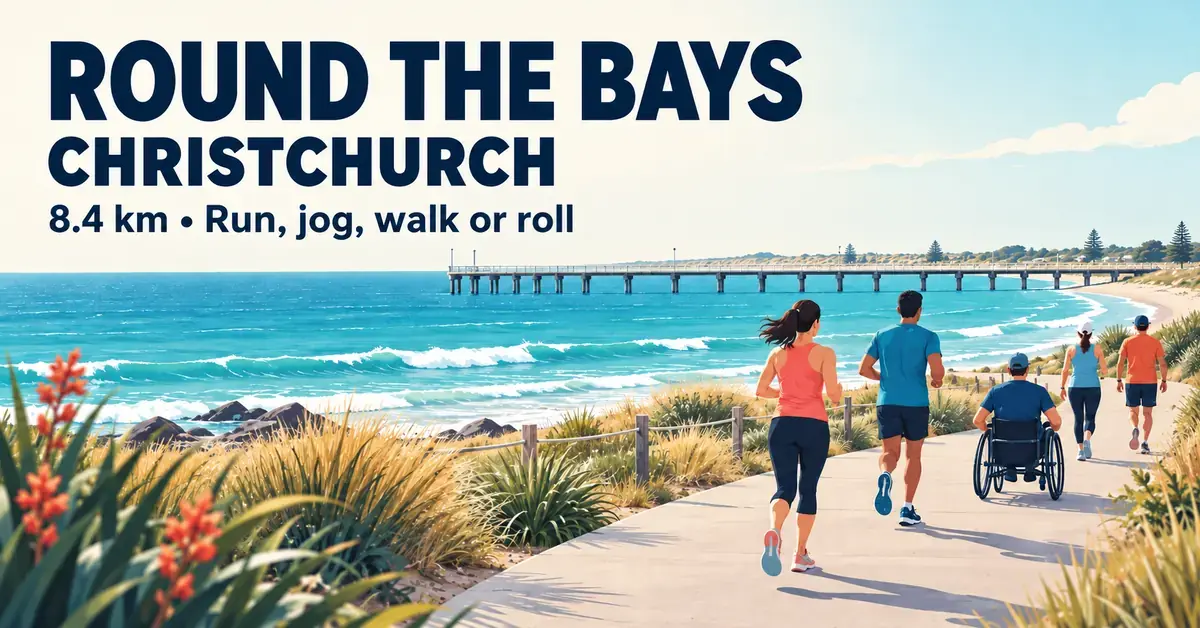
The Christchurch Marathon is built around one of New Zealand’s flattest, most consistent courses. The route loops through the rebuilt central city and the Avon River corridor with few hills to break rhythm, so runners can settle into an even pace — which is why it is a popular choice for Boston-qualifying attempts. Cool April mornings add to the fast conditions.
What does the winter calendar (June–August) offer?
Winter running in New Zealand rewards consistency and strength over raw speed. The Wellington Marathon on 28 June is the season’s centrepiece, run on a flat harbourside course that the capital’s famous wind can still make honest. The Kirikiriroa Marathon opens winter on 6 June along Hamilton’s Waikato River paths, and club cross-country championships run through June and July as preparation for spring.
| Event | 2026 Date | Location | Distances |
|---|---|---|---|
| Kirikiriroa Marathon | 6 June | Hamilton | Marathon, Half, Relay |
| Gazley Volkswagen Wellington Marathon | 28 June | Wellington | Marathon, Half, 10km, Kids’ Magic Mile |
| Nelson Marathon | 11 July | Nelson / Tasman | Marathon (solo/relay), Half |
| Taupo Marathon | 1 August | Taupo | Marathon, Half, 10km, 5km |
Are the winter races worth travelling for?
Yes — several are among the flattest courses in the country. Wellington’s waterfront, Hamilton’s river paths and Nelson’s off-road Great Taste Trail are all fast when the weather cooperates, and winter fields are smaller, so entries and accommodation are easier to secure than for the spring showpieces. The trade-off is colder, wetter conditions that demand proper layering.
What are the spring and early-summer highlights?
As daylight returns from September, the calendar swings back to the major urban centres and their signature routes. The Auckland Marathon on 1 November is the only day of the year runners can cross the Auckland Harbour Bridge on foot, and the Queenstown Marathon two weeks later, on 14 November, acts as the unofficial end-of-season celebration. Earlier in spring, the North Shore Marathon (6 September) and Emerson’s Dunedin Marathon (13 September) give runners a scenic build-up.
| Event | 2026 Date | Location | Distances |
|---|---|---|---|
| North Shore Marathon | 6 September | Takapuna, Auckland | Marathon, Half, Quarter, 5km |
| Emerson’s Dunedin Marathon | 13 September | Dunedin | Marathon, Half, 10km, 5km |
| Kaikoura Mountains to Sea | 24 October | Kaikoura | Marathon, Half, 10km, 5km |
| Barfoot & Thompson Runaway Auckland Marathon | 1 November | Auckland | Marathon, Half, 11km Traverse, 5km |
| Queenstown Marathon | 14 November | Queenstown | Marathon, Half, 10km, Kids |
How do you get to the start of the Auckland Marathon?
The full and half marathons start on Auckland’s North Shore and finish in the central city, so most participants reach the start line by pre-booked event ferry or bus from downtown Auckland. Crossing the Harbour Bridge — closed to traffic for the race — is the emotional high point, with open views over the Waitemata Harbour before the run into the city.
Where can you find trail and ultra events in 2026?
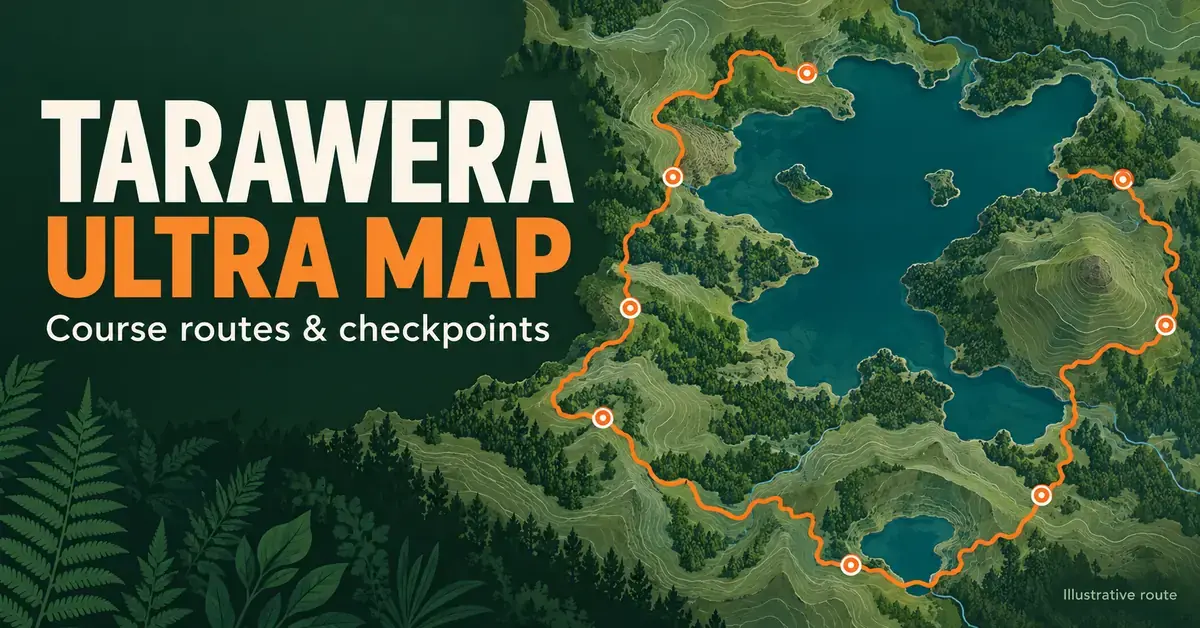
Trail running is the fastest-growing part of the New Zealand calendar. The season opens in February with the Tarawera Ultra-Trail by UTMB in Rotorua, a UTMB World Series race offering distances up to 100 miles. Autumn brings the XTERRA Rotorua Festival’s forest trail runs and the point-to-point Routeburn Classic through Fiordland’s World Heritage backcountry, while the Kepler Challenge closes the year in early December. For a full month-by-month list, see our dedicated trail running calendar.
| Event | 2026 Date | Location | Format |
|---|---|---|---|
| Tarawera Ultra-Trail by UTMB | 14–15 February | Rotorua | 100M, 100K, 50K, 21K |
| XTERRA Rotorua Festival (trail run) | 11 April | Rotorua | 11K, 21K trail |
| Routeburn Classic | 18 April | Fiordland | 32km alpine trail |
| Kepler Challenge | 5 December | Te Anau, Fiordland | 60km trail (+ 27km Luxmore Grunt) |
What extra preparation do alpine trail races need?
Backcountry events such as the Routeburn Classic and the Kepler Challenge enforce mandatory-gear lists — typically thermal layers, a seam-sealed waterproof jacket, hat and gloves — because mountain weather can turn quickly even in summer. Failing a gear check can mean disqualification, so pack and weigh your kit before travelling. These events also cap entries and can sell out within minutes, so plan to enter the moment registration opens.
How should you train for New Zealand’s varied terrain?
A single-surface training plan rarely works for a New Zealand season that mixes Auckland tarmac with Rotorua forest and South Island gravel. Adding at least one weekly session on a non-road surface improves balance and strengthens the stabilising muscles around the ankles and feet. If your target race is a road marathon, though, keep most of your mileage on sealed roads so your legs adapt to the specific impact of race day.
- Summer: easy trail miles and high cadence to build an aerobic base.
- Autumn: marathon-pace work on flat roads ahead of the fast races.
- Winter: strength work plus cross-training such as cycling or swimming.
- Spring: hill repeats for bridge crossings and coastal undulations.
How much of your training should be on the road?
For a road marathon such as Christchurch or Auckland, aim to run the clear majority of your kilometres on sealed surfaces. Roads load the legs differently from trails, and runners who train almost entirely off-road often meet shin soreness or calf strain when they switch to asphalt on race day. Rotating between two pairs of shoes also spreads the mechanical load and can lower injury risk.
What nutrition and hydration strategy works best?
New Zealand’s swings between dry inland heat and humid coastal mornings mean sweat and sodium losses vary widely, so a “one size fits all” fuelling plan rarely holds up. The figures below are widely used endurance-sport guidelines rather than personal prescriptions; test them in training, because gut tolerance is individual. Many events stock specific on-course brands, so practise with whatever the aid stations will carry.
| Component | Typical target | Timing |
|---|---|---|
| Carbohydrates | 30–60 g / hour | Start early, every 30–45 min |
| Fluids | 400–800 ml / hour | Little and often |
| Sodium | 300–600 mg / hour | Higher in humid events |
| Caffeine | Optional | Final 45–60 min of the race |
How do you avoid dehydration in dry conditions?
Follow a timed drinking plan rather than waiting until you feel thirsty, especially on the dry, windy Canterbury plains where fluid loss through breathing and evaporation is easy to underestimate. Adding electrolytes helps you retain fluid, and starting your carbohydrate intake early — within the first 45 minutes — reduces the risk of “hitting the wall” in the closing kilometres.
How do registration and travel logistics work?
Entries and travel for the marquee races need long lead times. Events such as Auckland and Queenstown use tiered pricing, so the earliest “super early bird” window — often released almost a year ahead — carries the lowest fees. For destination races, accommodation can sell out many months in advance, and most events require in-person bib collection at an expo the day before.
Checklist
- Confirm the official 2026 date and start time on the event website before booking travel.
- Enter during the earliest pricing tier to secure the lowest fee.
- Book accommodation as soon as your entry is confirmed for destination races.
- Pre-book event shuttles or ferries — essential for Auckland and Queenstown.
- Collect your race bib in person at the expo the day before.
- Check any mandatory-gear list for trail and alpine events.
- Arrive at least a day early to settle into the local climate.
When do 2026 entries usually open?
Most major New Zealand marathons open entries between six and twelve months before race day, and prices rise in stages as each tier sells out. Christchurch, for example, opened its 2026 entries in mid-2025. Signing up early secures the lowest price and, for the biggest events, guards against sell-outs in the popular half-marathon categories.
What gear suits the 2026 New Zealand circuit?
Your kit should be as adaptable as the calendar. Carbon-plated racing shoes suit the fast road marathons, while a more durable, lightly lugged shoe is better for mixed river-path and coastal courses. Technical, moisture-wicking clothing is essential year-round: cotton holds water, chafes in humidity and raises the risk of getting dangerously cold on exposed winter or alpine courses.
| Gear item | Best for | Selection tip |
|---|---|---|
| Carbon-plated shoes | Christchurch, Auckland | Save for key races and peak sessions |
| Light-lug hybrid shoes | Kirikiriroa, North Shore | Low-profile tread for mixed surfaces |
| Seam-sealed jacket | South Island trails | Must pass mandatory-gear checks |
| Anti-chafe balm | All events | Apply to friction points, rain or shine |
Why rotate more than one pair of shoes?
Alternating between a cushioned trainer for easy miles and a firmer or plated shoe for speed varies the stress on your muscles, tendons and joints across the week. Over a long season that variety helps manage niggles, and it means a wet or worn-out pair never leaves you without a race-ready option.
What mistakes do runners make planning a New Zealand season?
The most common error is treating the calendar like the northern hemisphere’s and expecting fast conditions in the middle of the year; in reality the quick road races fall in autumn and spring. Other frequent mistakes include:
- Leaving accommodation until entries are confirmed — destination-town beds sell out first.
- Racing brand-new carbon shoes without breaking them in.
- Ignoring an event’s mandatory-gear list for alpine and backcountry races.
- Under-dressing for Wellington or South Island wind and rain.
- Trying untested gels or drinks from an aid station on race day.
New Zealand’s deep outdoor and rural culture — long celebrated in institutions such as the television series Country Calendar (Wikipedia) — means even small-town events are well organised, but they can also fill quickly, so plan the logistics as carefully as the training.
Who is the New Zealand running calendar for?
The 2026 calendar suits almost every kind of runner. First-timers can start with a parkrun or a 5 km event and progress to a flat half marathon; time-focused runners have fast autumn and spring courses for personal bests or Boston qualifiers; and adventure runners can tackle alpine trails and ultras. Overseas visitors increasingly plan trips around a marquee marathon, pairing a race such as Queenstown or Auckland with a wider tour. If you are weighing distances, our guide to how long a marathon is can help you set a realistic first goal.
Sources
- Christchurch Marathon — official site
- Red Stag Rotorua Marathon — official site
- ASICS Runaway Hawke’s Bay Marathon — official site
- Gazley Volkswagen Wellington Marathon — official site
- Barfoot & Thompson Runaway Auckland Marathon — official site
- Queenstown Marathon — official site
- Emerson’s Dunedin Marathon — official site
- Tarawera Ultra-Trail by UTMB — official site
- Routeburn Classic — official site
- Kepler Challenge — official site
- Running Calendar NZ — Kirikiriroa, Nelson, North Shore dates
- NZ Running — Kaikoura Mountains to Sea
- XTERRA Rotorua Festival — trail run
Frequently Asked Questions
What is the fastest marathon in New Zealand?
The Christchurch Marathon is widely regarded as New Zealand’s fastest road marathon thanks to its flat, largely lap-based course through the central city and along the Avon River, run in cool, settled April conditions that favour even pacing and personal bests.
When do 2026 New Zealand marathon entries open?
Most major events open entries roughly six to twelve months before race day and use tiered pricing that rises as each level sells out. The earliest “super early bird” window carries the lowest fee, and popular half-marathon fields for Auckland and Queenstown can sell out well ahead of the date.
Are there trail and ultra events on the 2026 calendar?
Yes. The Tarawera Ultra-Trail by UTMB in February, the XTERRA Rotorua Festival and Routeburn Classic in April, and the Kepler Challenge in early December are among the standout trail and ultra events, with distances ranging from 11 km up to 100 miles.
Do you need a qualifying time for the Auckland Marathon?
No. The Auckland Marathon is open to runners of all abilities, with no qualifying standard for general entry. There are dedicated elite start zones for athletes with fast verified times, but everyone else simply enters and lines up by expected pace.
Is there a minimum age for New Zealand marathons?
Minimum ages vary by event and distance, and full marathons commonly set a lower limit somewhere between 16 and 18 on race day, sometimes with parental consent for younger entrants. Shorter distances usually allow younger runners, so always check the specific event’s rules before entering.