There is no single perfect way to run. “Proper running form” simply means moving in a way that is relaxed, efficient and repeatable for your body — posture that holds you tall, a foot that lands under your weight rather than reaching out in front, and a steady rhythm you can hold for kilometres. The reassuring part for most runners is that your body already self-selects much of this. The goal is to smooth out the few habits that waste energy or overload your joints, not to rebuild your stride from scratch. This guide breaks proper running form into its parts — posture, foot strike, cadence, arms and breathing — and separates what the evidence actually supports from the myths that circulate online.
Key Points
- There is no single “perfect” running form. Good form is relaxed, efficient and repeatable for your body — not a template copied from an elite runner.
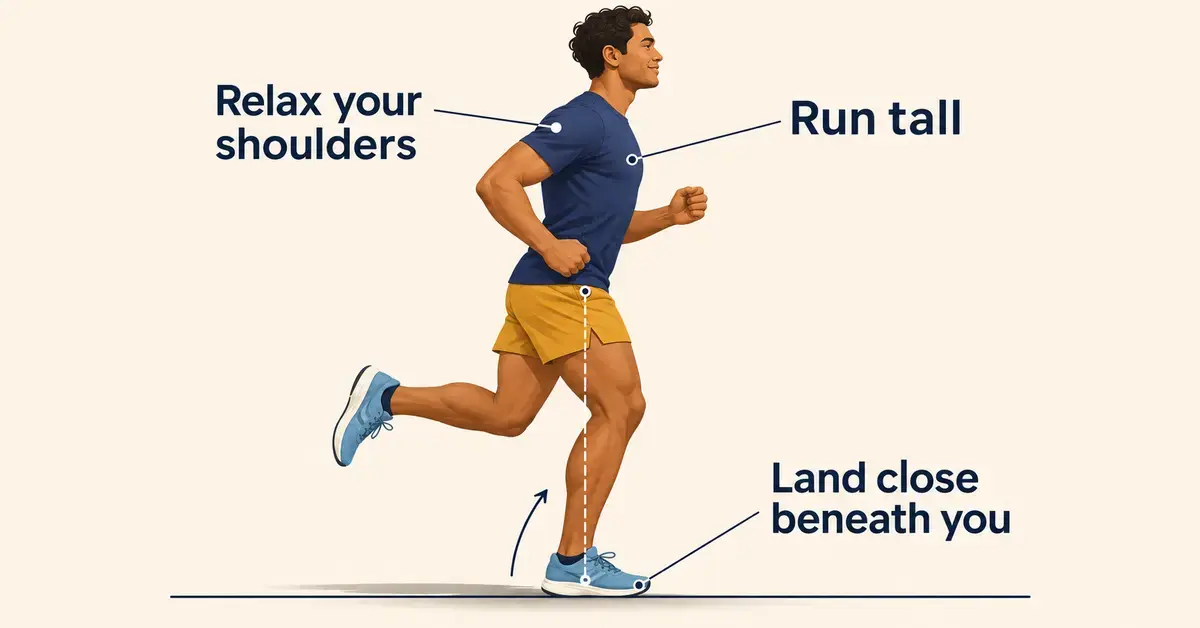
- Run tall and lean from the ankles. Keep a long spine, relaxed shoulders and a level gaze; let any forward lean come from your whole body, not a bend at the waist.
- Land closer to under your hips. Where your foot lands matters more than whether you heel-strike or midfoot-strike — the habit to fix is reaching out in front (overstriding).
- Forget the “180 steps a minute” rule. Natural cadence varies; nudging your own step rate up by about 5 to 10 percent is the better-evidenced change.
- Training load matters as much as technique. Build mileage gradually and treat form as one part of staying healthy.
What “proper running form” actually means
Good running form is form that is efficient, comfortable and low-risk for injury — and that you can hold as you tire. It is not a fixed template you copy from a champion. Watch the field at any marathon, from the lead pack down, and you will see a huge range of styles: different foot strikes, arm carriages and body angles. Studies of elite runners confirm there is no one biomechanical “correct” stride that everyone should adopt.
What the best runners share is not a single look but a set of principles: they stay tall and relaxed, they waste little energy bouncing or braking, and they move in a smooth, repeatable rhythm. For a recreational runner, chasing those principles matters far more than imitating one elite athlete’s posture. Small, gradual refinements to your natural stride are safer and more effective than a sudden overhaul, which can shift stress to tissues that are not used to it. If you are only just starting out, build the running habit first with something like a couch to 5K plan, then layer form tweaks on top once you are moving regularly.
Posture: how to run tall
Posture is the foundation of good form because everything else — foot strike, breathing, arm swing — works better when your torso is stacked and relaxed. The simple cue is to “run tall”: lengthen through your spine as if a string gently lifts you from the crown of your head, so you are neither slumped forward nor arched back.
Head and gaze
Keep your head balanced over your shoulders with your chin roughly level with the ground. Let your eyes settle on the path about 10 to 20 feet (roughly 3 to 6 metres) ahead rather than on your feet. Looking down drags your head forward and rounds your upper back, while tipping your head too far back makes you lean away from the direction you want to go. A neutral head position keeps the whole chain aligned.
Shoulders, arms and hands
Drop your shoulders down and away from your ears, and check them often — they tend to creep up and tense as you tire. Bend your elbows at roughly 90 degrees and swing your arms forward and back from the shoulder, not across your chest. The arm swing is not there to drive you forward in distance running; it counterbalances the rotation of your legs and keeps your rhythm steady, so crossing your arms over the midline of your body just creates wasted twist. Keep your hands loose, as if holding a crisp or a potato chip you do not want to crush — clenched fists send tension up the arms and into the shoulders.
Lean from the ankles, not the waist
A slight forward lean can help you move with gravity, but it must come from the ankles with your body angled as one straight line from head to foot. The common mistake is bending forward at the waist or hips, which collapses your chest, shortens your breathing and pushes your foot out in front of you. Think of leaning your whole tall frame very slightly forward, not folding in the middle. For many runners, simply standing tall with a barely perceptible lean is enough; there is no magic angle to force.
Foot strike: heel, midfoot or forefoot?
Foot strike is the most argued-about part of running form, and the honest answer is that no single pattern is proven best for everyone. Runners are usually grouped as heel strikers (the heel touches down first), midfoot strikers (the foot lands fairly flat) or forefoot strikers (the ball of the foot lands first). All three appear among fast, healthy runners.
Does your foot strike cause injury?
Current research does not support the popular idea that heel striking is dangerous or that everyone should switch to a midfoot or forefoot landing. A large review of more than 50 studies found no compelling reason for uninjured heel strikers to change their pattern: midfoot striking showed no running-economy advantage, and runners who deliberately switched often lost efficiency in the short term. Each pattern simply moves the load around. Heel striking tends to place more load through the knee and raise the rate at which impact is applied, while forefoot striking shifts stress onto the calf, Achilles tendon and the muscles under the foot. If you are a comfortable, injury-free heel striker, there is little reason to re-engineer your foot strike.
The real goal: land under your body
What matters more than which part of your foot lands is where it lands relative to your hips. Overstriding — reaching your foot well out in front of your centre of mass — acts like a brake with every step, increases impact forces and is the habit most worth fixing. Aim to let your foot come down closer to underneath your body, with your shin fairly upright at contact. The most effective fix combines a slightly quicker cadence with a simple cue to land with your foot beneath your body rather than reaching forward — cadence is covered in the next section. Your footwear plays a supporting role too, so choosing running shoes that suit your stride and feel comfortable matters more than their heel height or marketing claims.
Cadence and stride: the truth about “180 steps a minute”
You have probably read that you should take 180 steps per minute. Treat that number as a rough guide, not a rule. It traces back to a coach counting the cadence of elite distance runners at the Olympics — a descriptive average for world-class athletes racing, not a target proven right for every recreational runner on an easy jog. Natural cadence varies with your height, leg length, pace and experience, and easy-run cadences for everyday runners commonly sit somewhere in the 160s to 180s.
The more useful, better-evidenced idea is to work from your own baseline. Gait-retraining studies show that nudging your step rate up by about 5 to 10 percent — taking slightly shorter, quicker steps — reduces overstriding and lowers loading through the knee, without hurting your running economy. That small adjustment, not a fixed magic number, is one of the most consistently supported tweaks in running biomechanics. Pushing your cadence far above your natural rate, on the other hand, just makes running feel frantic and inefficient.
How to find and adjust your cadence
Count your steps for 30 seconds on an easy run and double it to get steps per minute, or let a GPS watch or phone track it. If you are prone to overstriding or recurring impact injuries, try lifting that number by a handful of steps per minute:
- Run to music or a metronome app set a little above your current cadence.
- Think “light and quick” feet rather than longer strides.
- Change it gradually over several weeks so your body adapts.
- Expect faster paces to naturally raise your cadence — you do not need to force one number across every run.
Breathing and staying relaxed
Relaxation is a form cue in its own right. Tension in the jaw, hands and shoulders quietly drains energy and can creep into your stride. Do a quick top-to-toe check every few minutes: soften the face, drop the shoulders, unclench the hands. For breathing, most runners settle into a rhythm that matches their effort — deeper belly breaths rather than shallow chest breaths help, and there is no single breathing pattern you must obey. If you can speak in short sentences on an easy run, your effort and breathing are in a sensible place.
Does form change on easy runs versus faster running?
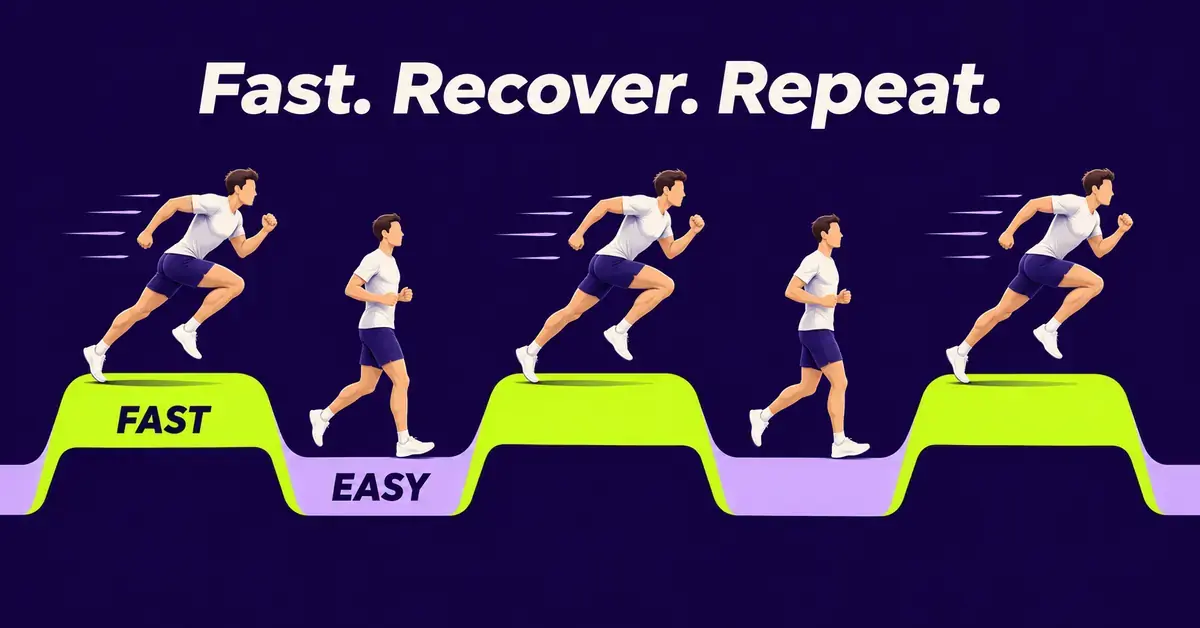
Yes, and it should. On slow, easy runs your cadence will be lower, your lean minimal and your whole stride more relaxed — forcing a racing cadence onto a gentle jog just wastes energy. As you speed up, your cadence rises, your stride naturally lengthens behind you (not by reaching further in front), your lean increases a touch and your arm drive becomes more pronounced. This is why structured speed sessions such as interval training are useful: running faster in short bursts lets you feel a quicker, more powerful form, which can carry over to your everyday pace.
Common running form mistakes
Most form problems fall into a short list of recurring habits. You rarely need to fix all of them at once — pick the one most relevant to you and work on it over several weeks.
- Overstriding: landing with the foot well ahead of your body, braking on every step. The single most worthwhile fix for many runners.
- Bouncing: too much vertical movement wastes energy that should carry you forward. Quicker, lighter steps help flatten it out.
- Looking down: staring at your feet rounds the upper back and shortens your breathing.
- Tense shoulders and clenched fists: tension travels, costing energy and stiffening your stride.
- Arms crossing the body: swinging arms across your chest adds twist and throws off your rhythm.
- Trying to switch foot strike overnight: an abrupt change loads unfamiliar tissues and often causes new problems.
- Chasing a cadence number: leaping to 180 from a much lower natural rate feels frantic; small, gradual increases work better.
Drills and exercises to improve your form
Form improves more through repetition and strength than through thinking hard mid-run. A few simple additions to your week make the biggest difference:
- Strides: 4 to 6 relaxed accelerations of about 20 seconds at the end of an easy run, focusing on quick, light feet and a tall posture.
- Running drills: high knees, A-skips and butt kicks teach a quicker, more upright stride when done for short distances before a run.
- Strength work: core, glute and calf strength let you hold a tall posture and a stable pelvis as you tire. Weak hips and core are a common cause of form breaking down late in a run.
- Cadence practice: short segments run to a metronome slightly above your natural step rate.
- Posture cues: a simple “run tall, relax the shoulders” reminder every kilometre or two.
Introduce drills and strength work gradually, and keep the bulk of your running easy. Form is something you build over months, not something you force in a single session.
How form connects to injury prevention
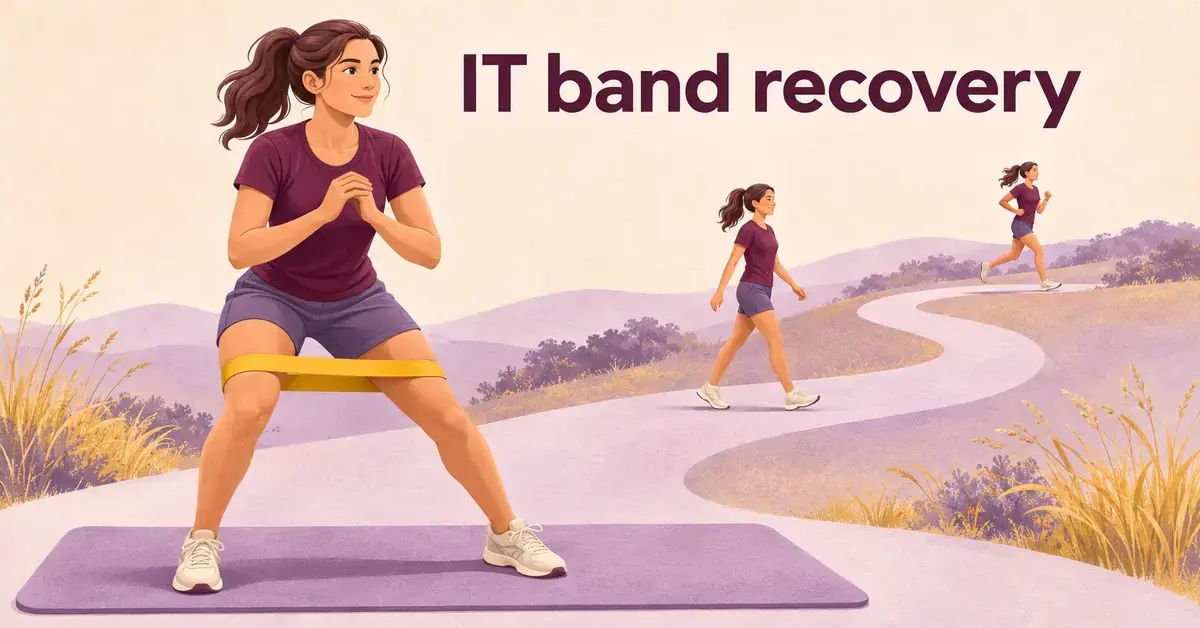
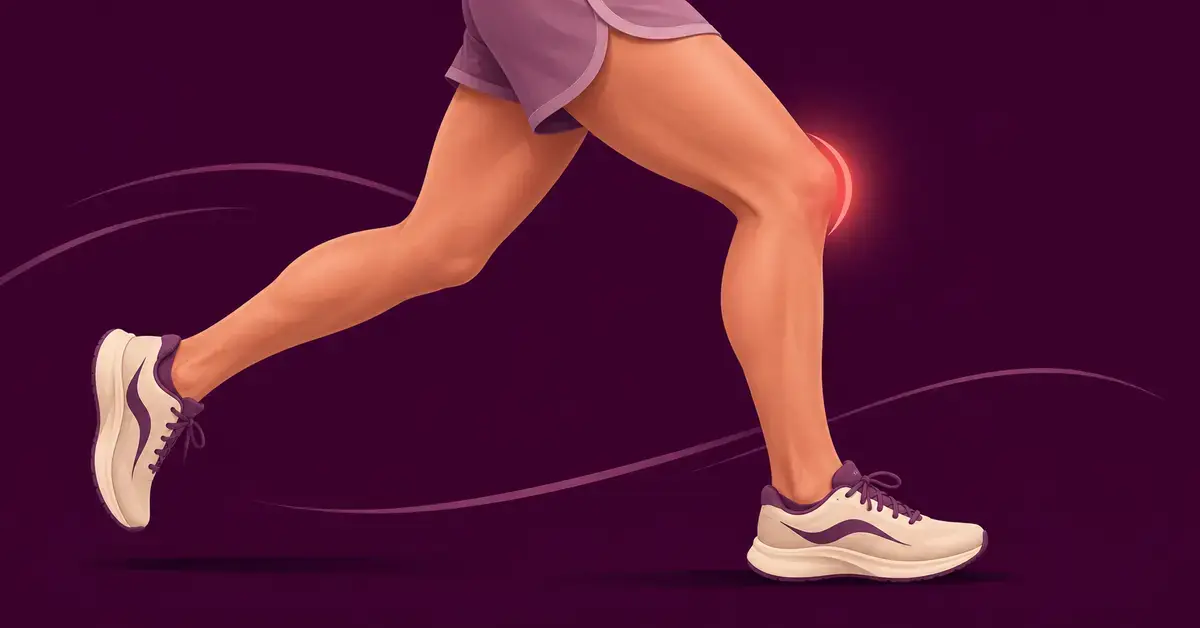
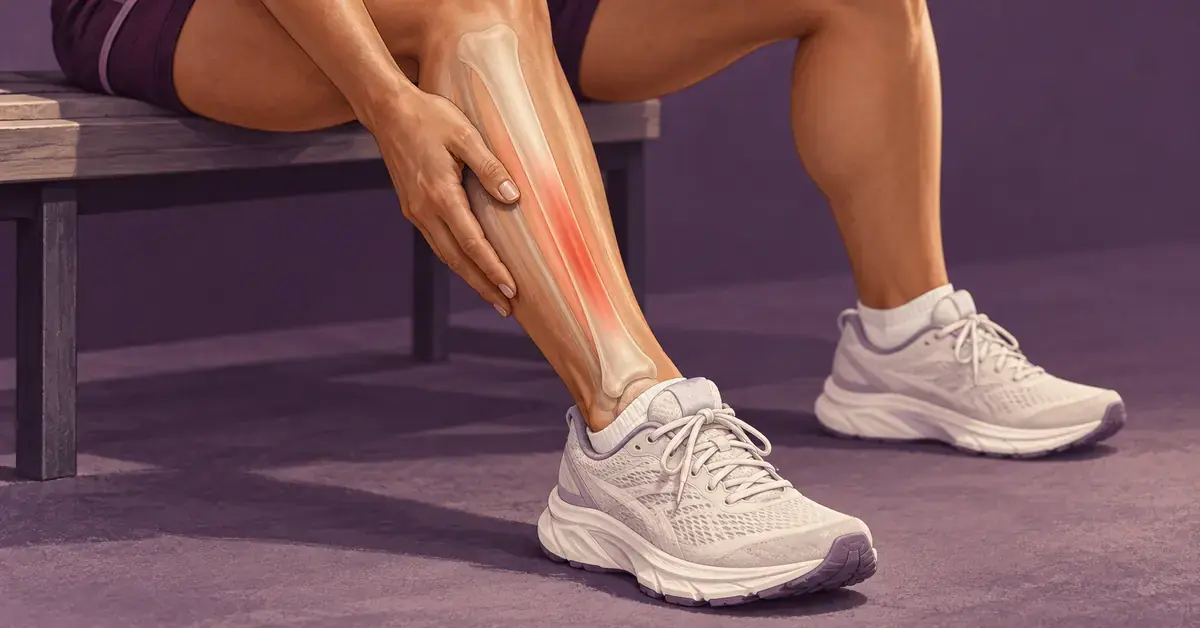
Better form can reduce some of the loads linked to common running injuries — cutting overstriding and raising cadence slightly, for example, lowers stress through the knee, which is relevant to problems such as runner’s knee. Form habits can also feed into overuse issues like shin splints and IT band syndrome.
That said, keep form in perspective. Just as important as technique is how you manage your training load — building up gradually rather than doing too much, too soon, too fast, without enough recovery. No amount of perfect technique will protect you if your mileage spikes week to week. Treat form as one useful piece of a bigger picture that also includes sensible load progression, suitable footwear, strength work and rest. If you already have pain, see a physiotherapist or sports doctor rather than guessing at a form fix.
Is there a video that explains proper running form?
Yes — if you would rather watch good technique than read about it, the short guide below from UK running coach James Dunne demonstrates posture, cadence, foot strike, arm swing and relaxed breathing in a few minutes. It is a useful visual companion to the cues in this article, because seeing a quick, light, tall stride in motion often makes the ideas click faster than a description can.
Disclaimer
This article is general information about running technique, not medical advice. Running form is individual, and the research on foot strike and cadence continues to evolve. If you are recovering from or experiencing a running injury, or you are unsure whether to change your technique, consult a qualified physiotherapist, sports doctor or running coach before making significant changes to how you run.
Sources
- Marathon Handbook — Proper Running Form: tips for better technique
- Marathon Handbook — Heel strike vs forefoot running: the latest research
- Marathon Handbook — Average stride length and why the 180-cadence rule is wrong
- Canadian Running Magazine — Heel strikers can relax: gait retraining is not warranted
Frequently Asked Questions
How should my running form change on hills?
Going uphill, shorten your stride, lift your knees a little more and lean very slightly forward from the ankles while keeping your torso tall and your arms driving; let your effort, not a longer reach, carry you up. Running downhill, resist the urge to lean back and brake. Stay tall with a small forward lean, keep your cadence quick and your steps light, and avoid overstriding, which hammers the knees on a descent.
Is proper running form different on a treadmill?
The principles are the same, but the moving belt helps pull your leg back for you, so it is easy to let your feet land out in front and overstride. Keep your posture tall, your cadence quick and your gaze forward rather than down at the console. Setting the treadmill to a 1 percent incline roughly mimics the effort of running outdoors.
How long does it take to improve running form?
Expect weeks to months, not days. Form is a habit built through repeated practice, drills and strength work. Change one thing at a time and make adjustments gradually, because sudden overhauls tend to cause new aches rather than fix old ones.
How do I hold my form when I get tired late in a run or race?
Form tends to fall apart as you fatigue — the shoulders creep up, the posture slumps and the stride shortens into a shuffle. Use quick cues to reset: run tall, drop the shoulders, drive the arms and keep the feet light and quick. The core, glute and calf strength you build in training is what lets you hold a tall posture when you are tired, which is why strength work matters as much as the cues themselves.